

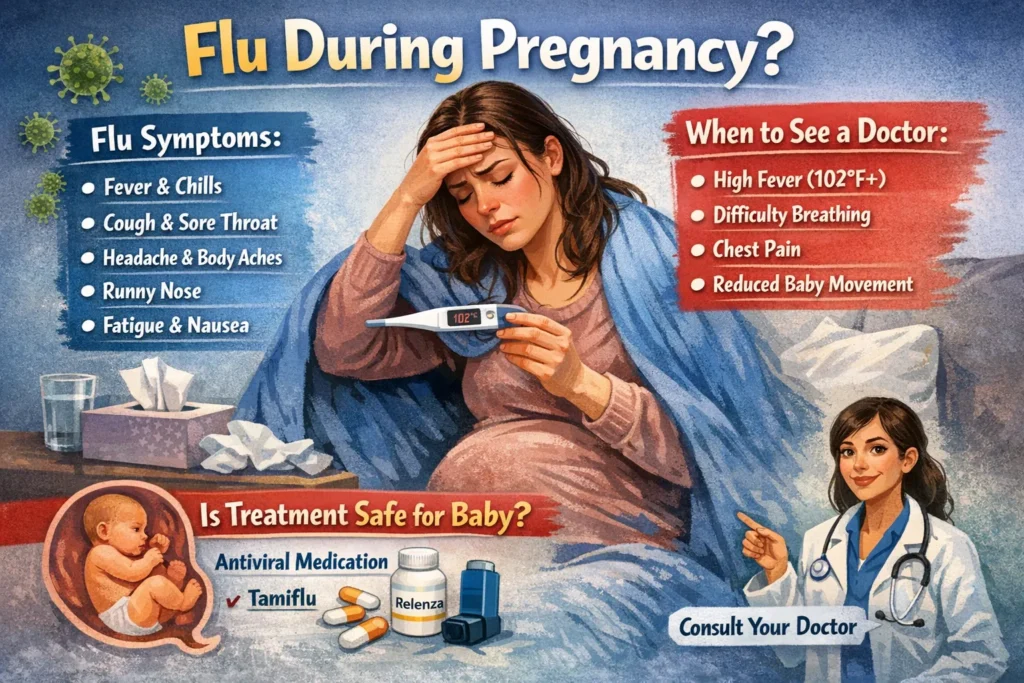
Symptoms are similar to nonpregnant adults, but in pregnancy you should act soon to get medical attention. Common flu symptoms include:
• fever or feeling feverish/chills,
• dry cough,
• sore throat,
• runny or stuffy nose,
• headache, muscle aches, body aches,
• extreme tiredness,
• sometimes vomiting or diarrhea, and
• a temperature of over 100.4°.
A high fever is considered to be 102 degrees or higher (38.9 degrees C). First trimester fevers are more often associated with neural tube defects than fevers occurring later in pregnancies.
You should seek immediate medical attention if you have any of the following conditions:
• trouble breathing, breathing faster than usual, or feeling like you can’t catch your breath,
• pain or pressure in the chest,
• lips or face turning bluish,
• confusion or difficulty staying awake,
• high fever medication approved by your doctor doesn’t lower your fever,
• decreased baby movements in later pregnancy, and
• signs of preterm labor: contractions, pelvic pressure, leaking fluid, bleeding.
The antiviral medication oseltamivir (Tamiflu) is the preferred oral antiviral in pregnancy because it has a history of the most safety and effectiveness data. It works best when started as soon as possible, ideally within 48 hours of symptom onset, but can still help later if illness is severe.
Zanamivir (Relenza), an inhaled antiviral, is sometimes used. Baloxavir (Xofluza) is a newer oral drug but has less pregnancy safety data, so many clinicians still favor oseltamivir first.
4. Are these medications safe for my baby?
Large experience and studies suggest that treating flu with oseltamivir (Tamiflu) in pregnancy reduces the risk of severe maternal complications. The benefits outweigh potential risks in most cases. Untreated moderate to severe flu is more dangerous to both mother and baby than the recommended antivirals.
In general adults are most contagious from about 1 day before flu symptoms start and through 5–7 days after the symptoms begin. People with more severe illness or weaker immune systems may spread the virus for a longer period of time. You usually should stay home and away from others (except for medical care) until at least 24 hours after your fever is gone without using fever reducing medications and you feel significantly better.
Influenza A or B rarely crosses the placenta to infect the baby directly. The main risks to the baby are from maternal fever, low oxygen, or low blood pressure.
The flu virus itself is not known to directly cause neural tube defects. The primary concern with the mother having the flu is the high fever, especially in the first trimester when the neural tube is forming. Sustained high fever from any cause early in pregnancy is associated with a higher risk of neural tube defects.
With flu, organizations which focus on birth defects and preterm birth emphasize controlling fever, staying hydrated, and early treatment.
After delivery, an infected mother can pass flu to the newborn the usual way—through respiratory droplets (coughing, sneezing, close contact). Newborns are very vulnerable, so caregivers with flu should wear a mask, wash hands before touching the baby, and avoid coughing near the baby.
Breastfeeding is usually encouraged because breast milk contains antibodies that help protect the baby. If you feel too sick to nurse your baby, you can use a breast pump and have someone else feed the baby.


The KNOWHEN® Ovulation Test tracks your ovulation using only a drop of your saliva. It identifies your five (5) most fertile days and the best days in your ovulation cycle if you’re trying to conceive.