

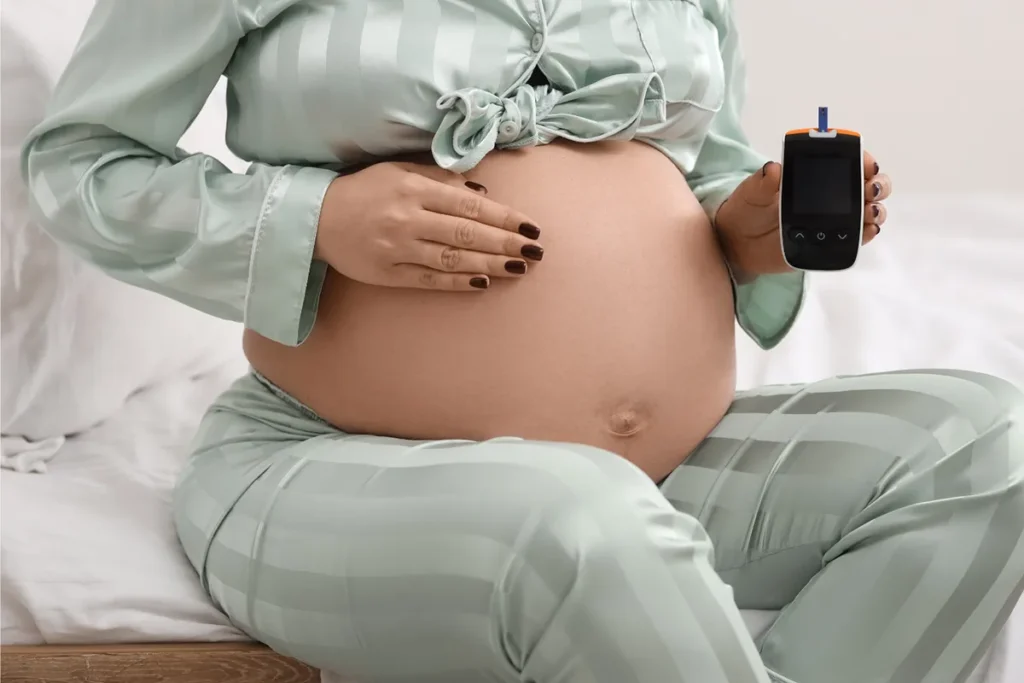
Pregnancy can bring on diabetes, called gestational diabetes.
Between 24 and 28 weeks of your pregnancy, your doctor will give you the first screening test for diabetes, called the glucose challenge test.
You will drink a 50-gram glucose solution. Exactly one hour later, your blood will be drawn to test for your blood sugar level.
There is some medical disagreement about whether you should be fasting before this test or not. The official answer is that fasting is not required. But practice varies. My experience accumulated over fifty years of practice is that you should not fast before this test.
When a woman who has been fasting takes the glucose challenge test, her body has not had the chance to respond to glucose in the way it does when you have eaten normally. Instead, your body is swamped with an excess of glucose and your body reacts by producing an excess of insulin to deal with the sudden excessive glucose. When you drink the 50-gram load of glucose, your response to the glucose is much greater than it would be to regular eating.
Normally, the anticipation of a meal triggers an insulin response. If you fast before taking the glucose challenge test, you will have a higher one-hour glucose value than you would if you had eaten normally that morning. This difference in glucose readings can push you over to a positive screen when would have been negative under normal eating conditions. When you have a positive glucose challenge test, you then get followed up with a three-hour glucose tolerance test you may not need. I have a learned about the falsely elevated one-hour screen by personally observing the difference in my clinic.
My personal recommendation is do not fast before the glucose challenge test. Eat normally. Avoid a very high-carbohydrate or high-sugar meal in the two hours before the test, but otherwise act as you would in any normal morning. Avoiding fasting tests what the glucose challenge screen is supposed to assess—how your body handles a glucose load in the context of normal daily metabolic function.
If your blood sugar levels exceed 130 to 140 milligrams per decaliter in the one hour glucose challenge test, your results will be followed up with a three-hour glucose tolerance test. This test does require fasting for at least eight hours before the test. In this test, you will drink a 100-gram solution of glucose. Your blood will be drawn before drinking the glucose solution and every hour for three hours after drinking the glucose solution.
Glucose level before test less than 95 mg/dL
1-hour glucose less than 180 mg/dL
2-hour glucose less than 155 mg/dL
3-hour glucose less than 140 mg/dL
Two or more values above the glucose limits constitutes a diagnosis of gestational diabetes. Only one positive value does not meet the diagnostic threshold for gestational diabetes and you will be told you do not have gestational diabetes and you will receive no further diabetes management in your pregnancy.
Some women have a positive glucose challenge test but do not have two abnormal glucose values in the glucose tolerance test so are not diagnosed with gestational diabetes. However, that one elevated screening is not meaningless. It shows that your ability to handle glucose can be stressed enough to produce abnormal results. What we don’t know is whether this one positive result will will produce any problems in your pregnancy.
Even though the one positive result from the glucose tolerance test is not considered to show gestational diabetes, research shows that this group of women is associated with increased risk of large babies. Even one abnormal fasting glucose reading can be associated with increased risk of preterm delivery and gestational hypertension. The risk differs depending upon which of the four readings are abnormal, but the risk is real and measurable.
I always monitored my patients who had only one in four positive readings in the glucose tolerance test. Patients were provided with dietary counseling, blood glucose levels were checked frequently at home, and repeating the glucose challenge test at 32 to 34 weeks. I also monitored whether or not the babies were large for their age.
Women who have gestational diabetes, or even a single positive result on the glucose tolerance test are at risk for developing type 2 diabetes in later years. The risk is highest in the first five years after pregnancy, but persists for decades.


The KNOWHEN® Ovulation Test tracks your ovulation using only a drop of your saliva. It identifies your five (5) most fertile days and the best days in your ovulation cycle if you’re trying to conceive.