

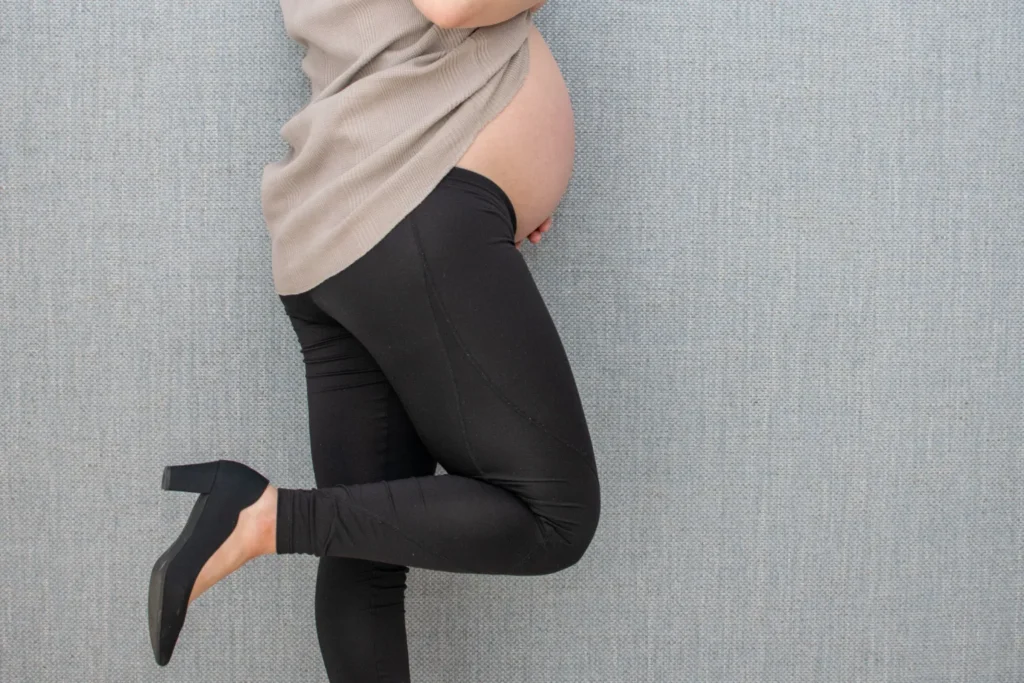
This may seem like a silly topic, but I actually had a reader ask me this question, so I suspect that many women wonder how high heels may affect your pregnancy. Certainly, wearing high heels should occur less often during pregnancy, but what if you are going to a special occasion and you really want to wear heels?
To understand why heels matter more in pregnancy than at any other time in your life, you need to understand what pregnancy is already doing to your body before any shoe gets involved.
Two things you need to know about wearing high heels during pregnancy. The first thing is understanding one of the hormonal changes in pregnancy. Your body produces a hormone called relaxin, which begins rising in early pregnancy and peaks around the 14th week. First, relaxin, a hormone that your body makes to soften joints in your pelvis also softens all the other joints in your body, including your knees, ankles, hips, and back. As experienced as you may be in wearing high heels when you are not pregnant, keep in mind that your joints are looser in pregnancy and that will change the way you move in your heels.
The second change is mechanical. As your baby grows, your center of gravity shifts forward. By the third trimester the shift is substantial and your body compensates by increasing the curve in your lower back and tilting your pelvis forward. This is called lumbar lordosis. Most women are not consciously aware of these adjustments because it happens gradually, but this shift in posture changes the way you walk, stand, and balance. This means your high heels change the way your ankles, knees, pelvis, and back react to walking. So this change will make your joints physiologically abnormal compared to when you are not pregnant. This is likely to make you unsteady on your feet in high heels during pregnancy.
When you are pregnant, especially in the last half of your pregnancy, you should avoid placing most of your weight on the balls of your feet. High heels shift much of your weight to the balls or your feet. It is better for you to carry your weight more evenly across the whole bottom of your feet from toes to heels rather that shift a large part of your weight to the balls of your feet.
Actually, high heels or not, in pregnancy I’ve always recommended against being on your feet a long stretch of time during a work day. In other words, a 12-hour day or even a 10-hour day should be avoided from the very start of pregnancy. If you usually work four 12-hour shifts, negotiate working three or four 8-hour shifts.
If you find that your blood pressure is beginning to go up, possibly indicating preeclampsia, I recommend working two or three 6-hour days. If shortening your work hours and working fewer days doesn’t seem to solve the problem, I’d recommend stopping out-of-the-home employment completely for the duration of your pregnancy.
How many hours a day you should be on your feet depends upon you and your pregnancy. For example, if your pregnant weight is 110 to 120 pounds and this is your first or second baby and your blood pressure is normal, you could probably stay on your feet a full six or seven hours a day. If your blood pressure rises, I would recommend staying at home, resting, and watching your blood pressure.
Some readers have asked if wearing high heels during pregnancy will cause a tilted uterus. High heels will not cause a tilted uterus. However, I would definitely recommend not wearing high heels during pregnancy, but if you must wear heels, wear shoes with no more than a 1-inch heel.


The KNOWHEN® Ovulation Test tracks your ovulation using only a drop of your saliva. It identifies your five (5) most fertile days and the best days in your ovulation cycle if you’re trying to conceive.